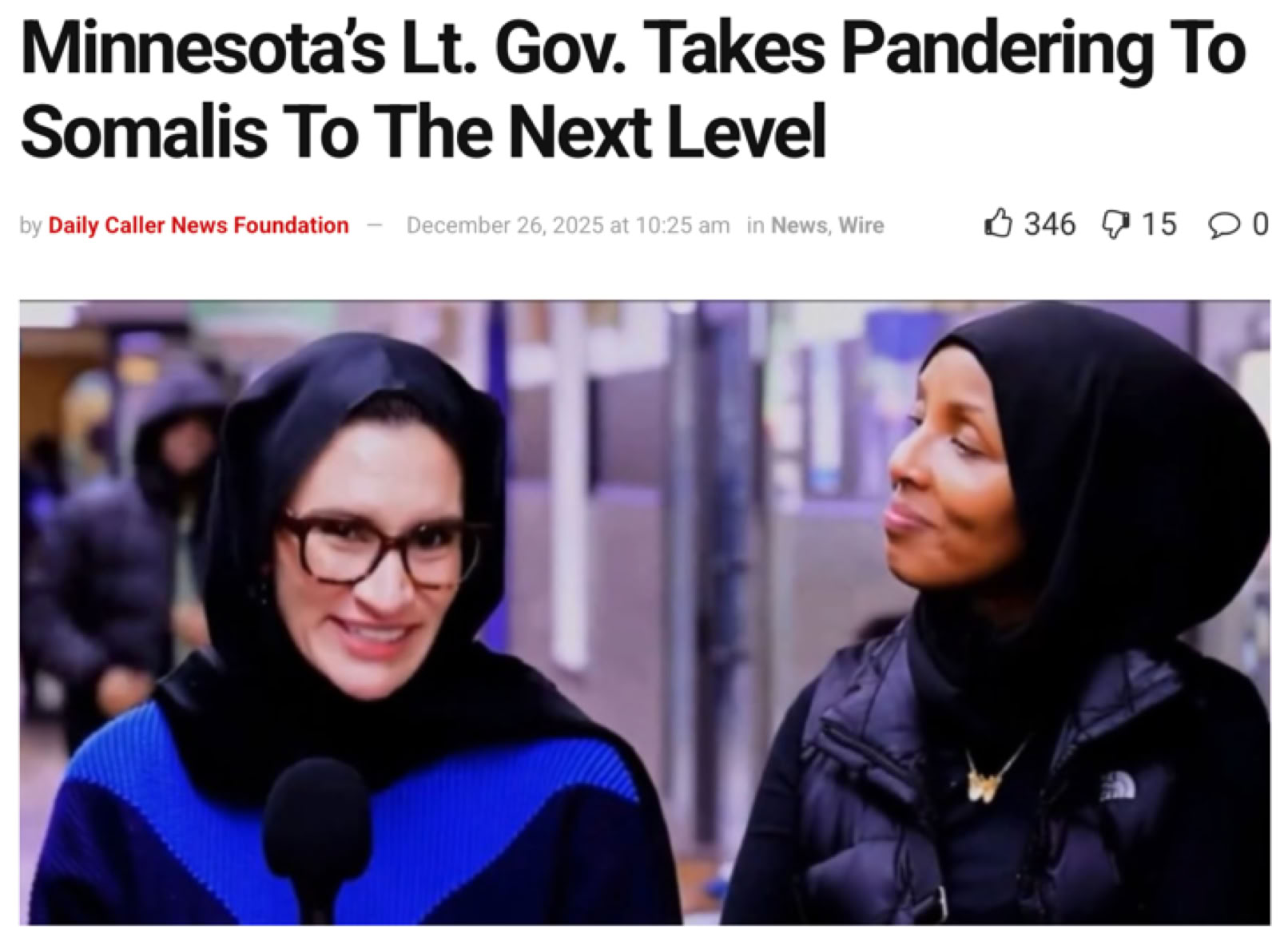
The once great State of Minnesota is now a model that Democrats, would like to use for the entire United States of America. Minnesota is like the canary in the coal mine, an early warning for the majority of Americans who love the country. Minnesota’s decision to replace its long-standing state flag reflects a growing tendency to rewrite history rather than confront it. While supporters of the change frame it as progress, the redesign represents a break from historical continuity and an unnecessary rejection of the state’s heritage.
Losing History in the Name of Progress
Minnesota became a state in 1858, and when its first official flag was adopted in 1893, it reflected the values and realities of its time. Like many state flags, it incorporated the state seal, depicting agriculture, settlement, and the motto L’Étoile du Nord—“The Star of the North.” These symbols were never meant to be timeless moral statements; they were historical artifacts. Judging them solely by modern standards risks misunderstanding their purpose and the era in which they were created.
Critics argue that the old flag’s imagery was offensive or exclusionary, particularly toward Indigenous peoples. These concerns deserve discussion, but removing the imagery does not resolve historical injustice. It simply removes a visual reminder that could have prompted education and reflection. History does not disappear because symbols are replaced.
Supporters of the new flag also point to design simplicity and visual clarity. But a state flag is not a corporate logo. Its role is to preserve identity and continuity, not to conform to contemporary design trends. The new flag’s abstract shapes and minimalist style feel generic and disconnected from Minnesota’s distinct past.
In attempting to create a symbol that offends no one, the state has adopted one that says very little. Meaningful progress comes from understanding history in its full complexity, not from erasing uncomfortable symbols. Minnesota’s old flag was imperfect, but it told a story. The new one feels like a blank page where history used to be.
The Somalian Connection
Somalia has been in continuous conflict since the collapse of the Somali state in 1991 with the overthrow of its authoritarian President Siad Barre. Without a government rival clan-based warlords fought for territory and resources.
Conflict brought famine, displacement and lawlessness. United Nations and United States tried to help but failed and withdrew in 1995. Somalia then entered a prolonged period of instability with weak transitional governments and localized power structures.
Islamist groups reshaped the conflict with Al-Shabaab now the major militant organization, which has waged terrorist attacks in Somalia and elsewhere.
U.S. involvement had included direct conflict with warlord Mohamed Farrah Aidid. In 1993, 18 U.S. soldiers were killed in the Battle of Mogadishu (“Black Hawk Down”). This lead the US to withdraw and reduce major humanitarian aid.
Since then, U.S. involvement has been limited to counterterrorism, airstrikes, intelligence, and training to help Somalis combat Al-Shabaab.
While it has avoided large-scale troop deployments it’s been one of the largest humanitarian donors to Somalia focused on saving lives, stabilizing communities, and building resilience. Key forms of U.S. humanitarian support include: food aid, health, water and sanitation, early recovery and resilience programs and humanitarian coordination and logistics.
Overall, U.S. humanitarian aid to Somalia has totalled many billions of dollars over three decades, making it a cornerstone of international relief efforts despite ongoing insecurity.
The U.S. has also provided support for displaced populations including shelter, emergency supplies, and protection services for refugees affected by fighting.
From the U.S. Census Bureau’s American Community Survey (ACS) 5-year estimates (2008–2012), Somalia-born population was 76,205 nationwide, largely in MN, WI, OH, WA, CA, DC, VA, MD, WV, and GA.
As of 2025 some estimates are that up to 300,000 people in the US identify as Somali or of Somali descent. Minneapolis–St. Paul, MN has the largest Somali community in the U.S., with around 80,000–108,000 Somali residents including U.S. citizens, lawful residents, refugees, asylees, and long-term immigrant families.
Then Ilhan Omar happened.
Born October 4, 1982, in Mogadishu, Somalia, her childhood coincided with the collapse of the Somali state and the outbreak of civil war in the early 1990s. When she was about eight, her family fled the violence. They spent roughly four years in a refugee camp in Kenya (Dadaab), a formative experience she has often referenced in speeches and interviews. This period shaped her later political identity, particularly her focus on displacement, humanitarian aid, and U.S. foreign policy.
In 1995, Omar’s family was admitted to the United States as refugees. They settled in Arlington, Virginia, then later moved to Minneapolis, Minnesota, which has one of the largest Somali-American communities in the U.S. Omar learned English rapidly and became involved in student activities. She later attended North Dakota State University, earning a degree in political science and international studies in 2011. Minnesota’s Somali diaspora provided both a support network and a political base that would later prove crucial.
Omar became politically active during her teenage years, initially canvassing for Democratic candidates. She worked as a community organizer, policy aide, and campaign staffer. Notably, she served as a senior policy aide to Minneapolis City Council member Abdi Warsame. Her activism focused on Housing and tenant rights, Education, immigration and refugee issues, Civic participation among immigrant communities.
In 2016, Omar ran and won the race for the Minnesota House of Representatives. Her victory drew national attention as emblematic of demographic and cultural change in American politics.
In 2018, Omar ran for Minnesota’s 5th Congressional District (Minneapolis and surrounding areas). She won the Democratic primary and then the general election easily in the heavily Democratic district. She aligned with a progressive bloc that included Alexandria Ocasio-Cortez, Rashida Tlaib, and Ayanna Pressley.
Omar quickly became a high-profile national figure due to her outspoken criticism of U.S. foreign policy, strong positions on Israel–Palestine, defence spending, and sanctions, advocacy for refugees, immigrants, and social welfare programs.
She has also faced significant controversy, including: accusations of antisemitic rhetoric, intense partisan attacks and death threats.
In 2023, she was removed from the House Foreign Affairs Committee by the Republican-led House, a move Democrats characterized as politically motivated.
Despite this, she has been re-elected multiple times, indicating durable support in her district.
Supporters see her story as evidence of American openness and democratic opportunity; critics see it as emblematic of deeper cultural and political tensions. Both views underscore why her career has become so symbolically charged.
Then, Peggy Flanagan happened.
Peggy is a socialist’s wet dream. This is how the Islamic takeover of America is happening.
Peggy or rather, Gizhiiwewidamookwe, (lit. speaks with a clear and loud voice woman) is of Irish and Ojibway descent. She fought for indigenous rights like her father. It’s seems strange that she is genuflecting at the altar of Islam.
Why?